
Last updated September 20, 2026
Full 25-point door and opener safety check with every visit - springs, cables, rollers, tracks, and your LiftMaster or Chamberlain opener included
You get a price before we start. It does not change when the truck arrives.

 Before
 After
After Before
 After
After Before
 After
AfterGarage Door Permits, Codes & Inspections in CA: What You Need to Know
Most homeowners assume a garage door replacement is a trade swap: take the old door down, bolt a new one on, done. In California, that assumption is wrong often enough to cost real money. A garage door project that adds structural header modifications is a building permit job under state code, not a contractor courtesy. And if the permit wasn’t pulled, that fact belongs on your TDS (Transfer Disclosure Statement) when you sell the property. This guide explains Thousand Oaks and Ventura County requirements in plain language: what triggers a permit, what it costs, what the inspector checks, and how the paperwork trail protects you on a future sale. For more guides & resources, see our blog.
Quick Answer
Whether you need a permit for garage door work in California depends on the scope of the change, not on what the contractor tells you. A like-for-like door swap on an existing opening usually requires no permit. Structural work, such as enlarging the opening or modifying the header, always requires a building permit, and skipped permits become a disclosure item when you sell the home.
Table of Contents
- Who Sets the Rules: California Code, Ventura County, and Thousand Oaks
- The Three Categories of Garage Door Work: No Permit, Maybe, Always
- What a City of Thousand Oaks Permit Actually Costs
- The Code Sections That Matter, in Plain Language
- How Unpermitted Work Affects Insurance Claims
- The Inspection Checklist: What a Ventura County Inspector Is Actually Looking For
- Unpermitted Work, the TDS, and the Sale of Your House
- Common Mistakes to Avoid
- When to Call a Professional
- Frequently Asked Questions
- The Bottom Line
BeforeAfterWho Sets the Rules: California Code, Ventura County, and Thousand Oaks
California enforces the California Building Code (CBC), which adopts and amends the International Residential Code. Ventura County and the City of Thousand Oaks add local amendments through county and municipal ordinances. For garage door work, three layers apply, in this order: state code sets the minimum standard; the county adds regional requirements for fire, wind, and seismic resistance; the city adds administrative rules: permit fees, inspection scheduling, and what the Building and Safety Division requires on the application.
Thousand Oaks homeowners deal directly with the City of Thousand Oaks Building and Safety Division, not the county, for permits. The city is the enforcing agency. That means the city’s fee schedule, plan requirements, and inspection workflow govern your project. Ventura County amendments matter for broader requirements like wind-load ratings on doors in certain zones, but the application itself runs through City Hall on West Hillcrest Drive.
In our experience across Thousand Oaks neighborhoods from Newbury Park to Lynn Ranch, the most common confusion is between county handouts and city process. Homeowners read a county PDF that says one thing, then find the city asks for a different form. We recommend checking the city’s current Building and Safety bulletins first, because the city is who you’ll deal with. The county’s role is secondary, setting standards the city adopts by reference.
One detail that catches people: Thousand Oaks sits in a high-wind zone by local code, so exterior doors, including garage doors, must meet a minimum design wind pressure. We’ll cover that under the code sections below. The point here is that the rules are layered, and the city layer is the one that costs you time if you get it wrong.
The Three Categories of Garage Door Work: No Permit, Maybe, Always
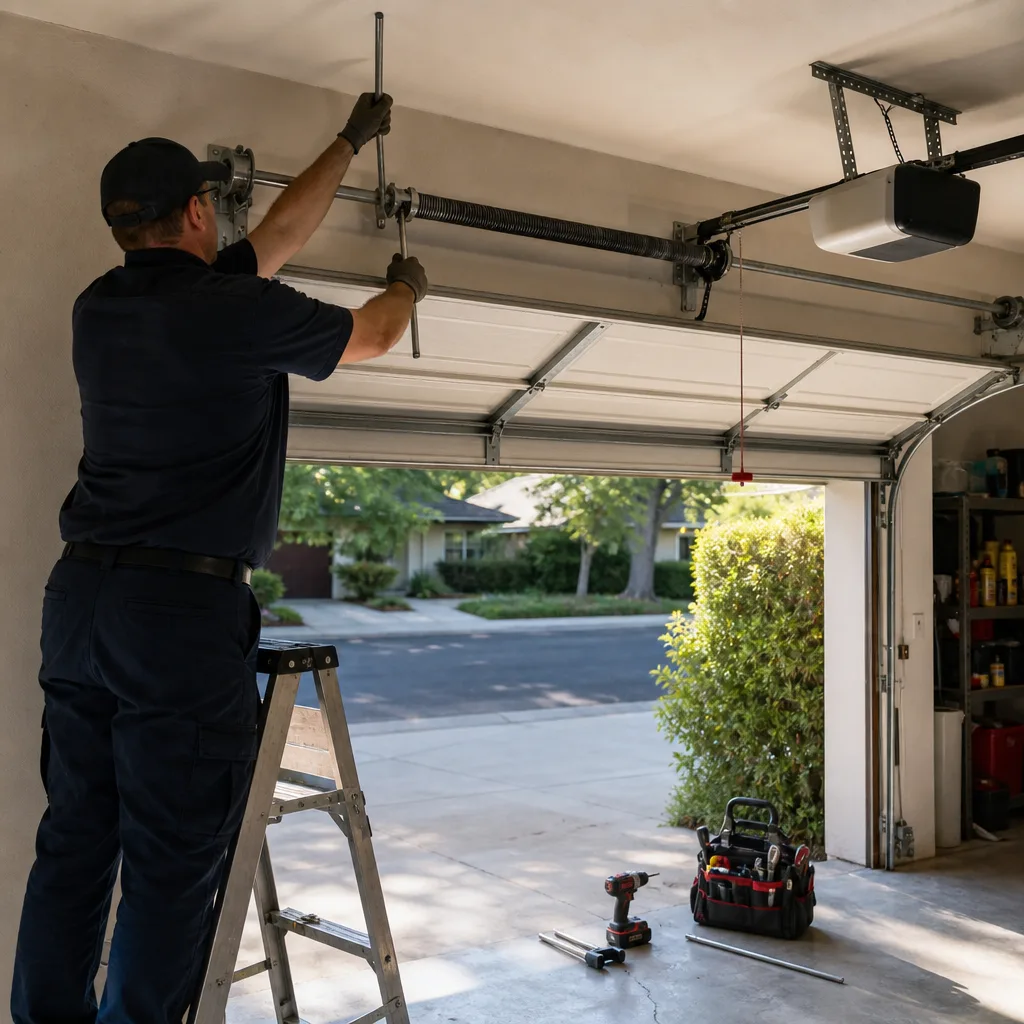
We classify garage door work in Thousand Oaks into three buckets. This framework matches how city plan checkers think, and it’s the most reliable way to know where you stand before you spend a dollar.
Category 1: Work That Never Requires a Permit
The California Residential Code exempts ordinary repairs and replacements of parts that don’t alter the structure. For garage doors, that includes:
- Replacing torsion springs, extension springs, cables, rollers, hinges, or tracks with parts of the same size and rating.
- Swapping a garage door opener motor, logic board, or trolley on an existing mount.
- Replacing a door panel or section when the opening, header, and jambs stay unchanged.
- Replacing a full door assembly with a like-for-like size when no structural elements are touched.
A like-for-like replacement means the new door fits the existing rough opening without moving a stud, cutting a header, or altering the footprint. In Thousand Oaks, we’ve replaced hundreds of doors this way with no permit, because the work leaves the building’s structural envelope untouched. A Clopay or Amarr door of the same nominal size, installed on the same existing jambs, falls under ordinary repair.
The caveat: “like-for-like” is not a judgment call. If the new door is taller, wider, or changes the opening in any dimension, you’ve left Category 1.
Category 2: Work That Requires a Permit in Some Jurisdictions
This middle band is where Thousand Oaks differs from neighboring cities. Work in this category is discretionary, meaning the city’s planning and building staff decide based on scope:
- Replacing an old one-piece tilt-up door with a sectional roll-up door on the same opening. Thousand Oaks typically wants a permit card for this because the track geometry changes, but some cities treat it as a straight replacement.
- Adding a new garage door where one did not exist, such as enclosing a carport to create an attached garage. This almost always triggers zoning and building review in Thousand Oaks.
- Installing a high-lift kit that raises the horizontal tracks nearer the ceiling. The city may classify this as a minor alteration, but it can change the door’s balance and wind-load rating.
If your project is in this band, call the City of Thousand Oaks Building and Safety Division before signing a contract. Ask one question: “Does this scope require a permit given the current code cycle?” Get the answer in writing, by email, and keep it. That email is part of your paper trail if the question ever resurfaces during a sale.
Category 3: Work That Always Requires a Permit Statewide
This is the non-negotiable tier. California’s code is unambiguous:
- Enlarging the garage door opening in any dimension: widening, raising the header, or cutting into load-bearing walls.
- Any modification to a beam, header, or lintel, including adding a steel angle, engineered lumber, or a new header.
- Removing or relocating shear wall, wall bracing, or hold-down hardware to change the opening.
- Converting a garage to living space, or adding a door that alters the garage’s fire separation from the house.
These trigger CBC Chapter 11B accessibility requirements when they involve substantial alteration, plus structural plan review. The inspector will want to see engineered drawings, a plan check approval, and a final sign-off before the work is legal. Skipping this tier is how a garage door project becomes a property sale liability.
What a City of Thousand Oaks Permit Actually Costs
A garage door replacement permit in Thousand Oaks typically runs between $180 and $420 in city fees, depending on the valuation you declare and the scope. That range is for the permit itself, not the door, labor, or engineering. Here is the breakdown structure we see on current Thousand Oaks permit cards:
| Fee Component | Typical Range |
|---|---|
| Building permit issuance fee | $90-$180 |
| Plan check fee (when drawings required) | $70-$150 |
| Inspection fee (rough and final combined) | $60-$110 |
| Technology / records surcharge | $10-$25 |
| Total typical range | $180-$420 |
Those numbers reflect our recent permit filings in Thousand Oaks. Your total will depend on the declared project valuation, which the city uses as the fee basis. Declare a higher project value and you pay a higher fee; the system is self-reported.
Documentation the Building and Safety Division typically asks for on a door replacement permit: a completed application form, a site plan showing the garage location on the lot, a dimensioned drawing of the opening and proposed door, and, for structural work, an engineer’s stamped design for any header or shear modification. If the project is a simple like-for-like with no structural change, the city often accepts a one-page job card without full plans.
The written-price rule we work under applies here too. Before any permit is pulled, you should have a flat, written scope from your contractor that says exactly who pulls the permit, who schedules inspection, and what happens if the inspector tags something. That is Clause 1 of The Haven Standard as we practice it: the written price and written scope come before any work starts, including the permit paperwork.
The Code Sections That Matter, in Plain Language
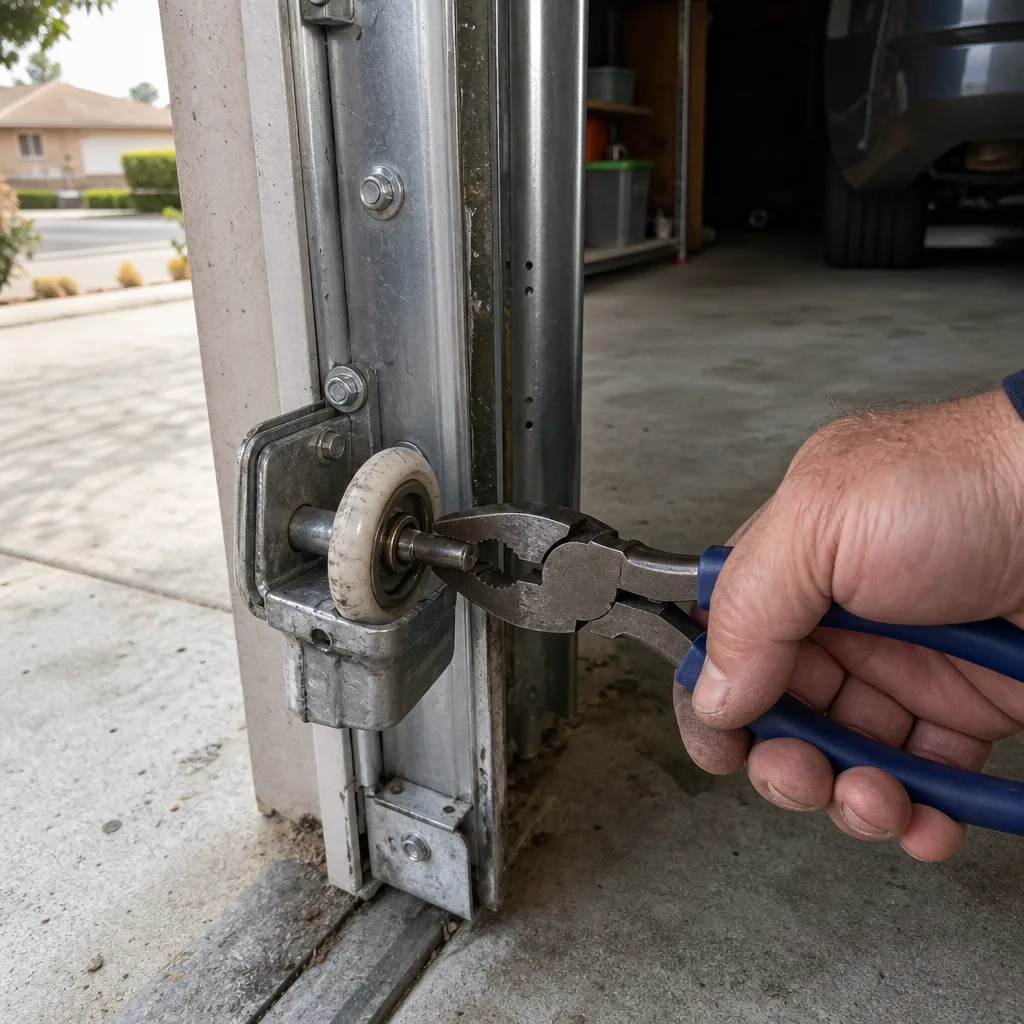
Three California code sections govern most garage door work in Thousand Oaks. We will give you the reference, then the one-clause plain explanation, because the trade vocabulary alone doesn’t help you plan.
CBC Chapter 11B: Accessibility
Chapter 11B sets accessibility requirements for buildings open to the public, and for multifamily residential. A single-family home garage door replacement in Thousand Oaks usually falls outside Chapter 11B, but there is one trigger that surprises people: if the garage is converted for a different use, or if a door opens onto an accessible path of travel, the city can apply 11B dimensional requirements to the landing and clear width. The plain clause: when the garage isn’t just a garage anymore, the door has to meet public-accessibility dimensions.
CRC Section R301: Design Wind Pressure
Section R301 requires exterior doors to resist the design wind pressure for the site. Thousand Oaks is in a zone where the city enforces this on garage doors, because the area’s hillside topography drives wind loads higher than a flat-lot city. In practice, a garage door installed in Thousand Oaks needs a wind-load rating that matches the exposure category of the site. A door rated for 90 mph doesn’t automatically pass on a ridgeline in Newbury Park. This is one of those requirements a city inspector checks, and a county amendment makes it stricter in Ventura County than in other parts of the state. The plain clause: the door has to be strong enough for the wind where it’s installed, and in Thousand Oaks that can be a higher bar than you’d think.
CRC Section R302: Fire Separation
Section R302 governs the fire separation between a garage and the living space, including the door between them and the garage door itself. The garage door is not required to be a fire-rated assembly in most single-family homes, but the wall between the garage and house is. When we modify a garage door opening, we cannot reduce the fire separation or the wall’s integrity. The plain clause: when the opening changes, the fire wall between the garage and the home still has to do its job, and the inspector will look at how the new opening meets it.
The Ventura County Amendment Layer
Ventura County’s local amendments to the CBC include stricter wind exposure maps and specific fire hardening requirements for garage doors in wildland-urban interface zones. Many Thousand Oaks neighborhoods, particularly those along the hillsides, sit in these interface zones. The county’s amendment can require a specific door rating or ember-resistant venting in the garage. That’s why two identical door projects a mile apart in Thousand Oaks can face different code triggers. We always check the site’s zone designation before quoting a door, because a fire-zone door can cost more than a standard Amarr or Wayne Dalton unit.
How Unpermitted Work Affects Insurance Claims
An insurance claim after a garage door failure is where skipped permits surface hardest. Here is the sequence an adjuster follows when a spring breaks violently or a door collapses, and the homeowner files a claim for property damage or injury:
- The adjuster pulls the permit history for the address. Cities like Thousand Oaks log permits by parcel number, and an adjuster knows exactly where to look.
- If the door was replaced without a required permit, the adjuster has a basis to deny or reduce a claim related to that door. The argument is that the work wasn’t code-approved, so the failure is excluded or the payout is reduced.
- If the unpermitted work caused damage, say a failed header that let a door sag and snap a spring, the insurer can pursue subrogation or simply deny the structural portion of the claim.
What an adjuster is actually looking for, in the order of importance: a permit record that matches the work, an inspection sign-off, and documentation of what was installed. A contractor who cannot produce any of that leaves the homeowner exposed. The documented photo record we provide on every job exists so that, in a claims situation, the homeowner can hand the adjuster evidence rather than a story. That’s Havens Standard Clause 4 in practice: photograph the failed component before quoting a replacement, then photograph the finished work after.
The practical rule for Thousand Oaks homeowners: if your project landed in Category 2 or 3 above, pull the permit, or buy a policy exclusion you didn’t know existed. The money you save skipping a $250 permit can cost twenty times that in a denied claim.
The Inspection Checklist: What a Ventura County Inspector Is Actually Looking For
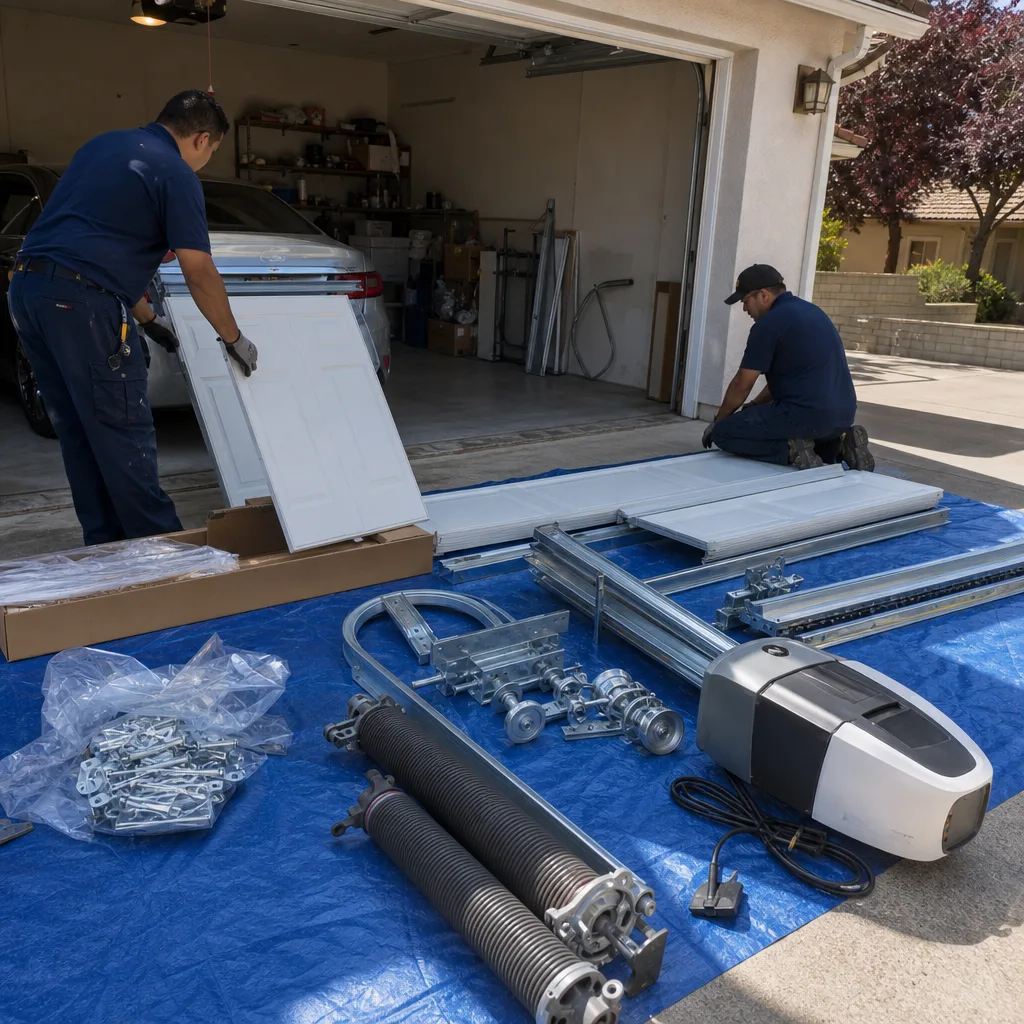
Inspection for a garage door project in Thousand Oaks happens in two phases when a permit is required. Here is what a Ventura County inspector, working under the city’s authority, is actually checking at each phase.
Rough Inspection (Before the Door Covers the Opening)
- Header condition and connection. The inspector verifies the existing or new header matches the engineered design, with correct fasteners at the king studs and jacks. For replaced headers, the inspector checks for a plan-check stamp matching the drawing.
- Shear wall and bracing. If the opening changed width or height, the inspector confirms that shear paneling, hold-downs, and nailing patterns match the plan. This is the item most likely to fail in Thousand Oaks hillside homes where a new door could alter the wall’s lateral capacity.
- Track mounting and back-hanging. The inspector checks that the vertical and horizontal tracks are anchored per the manufacturer’s instructions and the code, including structural adequacy for the door’s weight and wind rating.
- Fire separation continuity. If the opening is between the garage and living space, the inspector confirms the fire wall is intact and the door’s installation doesn’t compromise it.
Final Inspection (After the Door Is Installed)
- Balance and travel. The inspector may ask to see the door opened and closed under power, checking that it reverses on obstruction and that the limit switch stops travel at the correct points.
- Wind-load compliance. In zones where Ventura County amendments apply, the inspector checks for a label on the door showing the design pressure rating. Doors without a visible rating often get a correction notice.
- Weatherstripping and seals. The inspector confirms bottom seals and side jambs are installed to shed water, which matters in Thousand Oaks where winter rains drive water against doors on west-facing slopes.
- Sign-off documentation. The final sign-off goes to the permit record, not to the homeowner. That’s the paper trail you want. We make sure our customers receive a copy of the signed final, because that’s the document a future buyer’s agent will ask for.
The inspection itself is usually completed in under 30 minutes. The preparation is what takes time: having the plan set on site, the door label visible, and the rough work open for the inspector to see. Not having the plans on site is the most common scheduling fail we see from homeowners who self-perform.
Unpermitted Work, the TDS, and the Sale of Your House
California’s Transfer Disclosure Statement is a form the seller completes under penalty of perjury. One question asks whether any work on the property was done without required permits. If you had a garage door replaced with structural header work and no permit, the truthful answer is yes, and that answer belongs on the TDS when you sell. If you guess in the wrong direction because you didn’t know a permit was required, you’ve inherited a disclosure problem in a state where material facts are litigated after close of escrow.
This is where the contractor’s role matters. A contractor who takes a structural garage door job in Thousand Oaks without pulling a permit has just created a future TDS item. A contractor who says “you don’t need one” for a Category 3 job has given you legal advice without a license to practice law. The correct answer, from anyone doing structural work in this city, is: “This scope requires a permit. Here is what it will cost. Here is who pulls it.”
From the buyer’s side, unpermitted garage door work is a red flag that signals deferred maintenance elsewhere. A buyer’s agent who sees a non-permitted structural alteration will add it to the repair request list or the price concession. The $300 permit you skipped has become a $5,000 credit or worse: a terminated escrow. The paper trail is the part that matters, and that’s why we treat the permit as part of the job, not an optional add-on.
At Servo Garage Doors Thousand Oaks, every structural job includes a permit discussion early in the scope, before any price is quoted. That’s not a sales point. It’s the only way the work is legally done.
Common Mistakes to Avoid
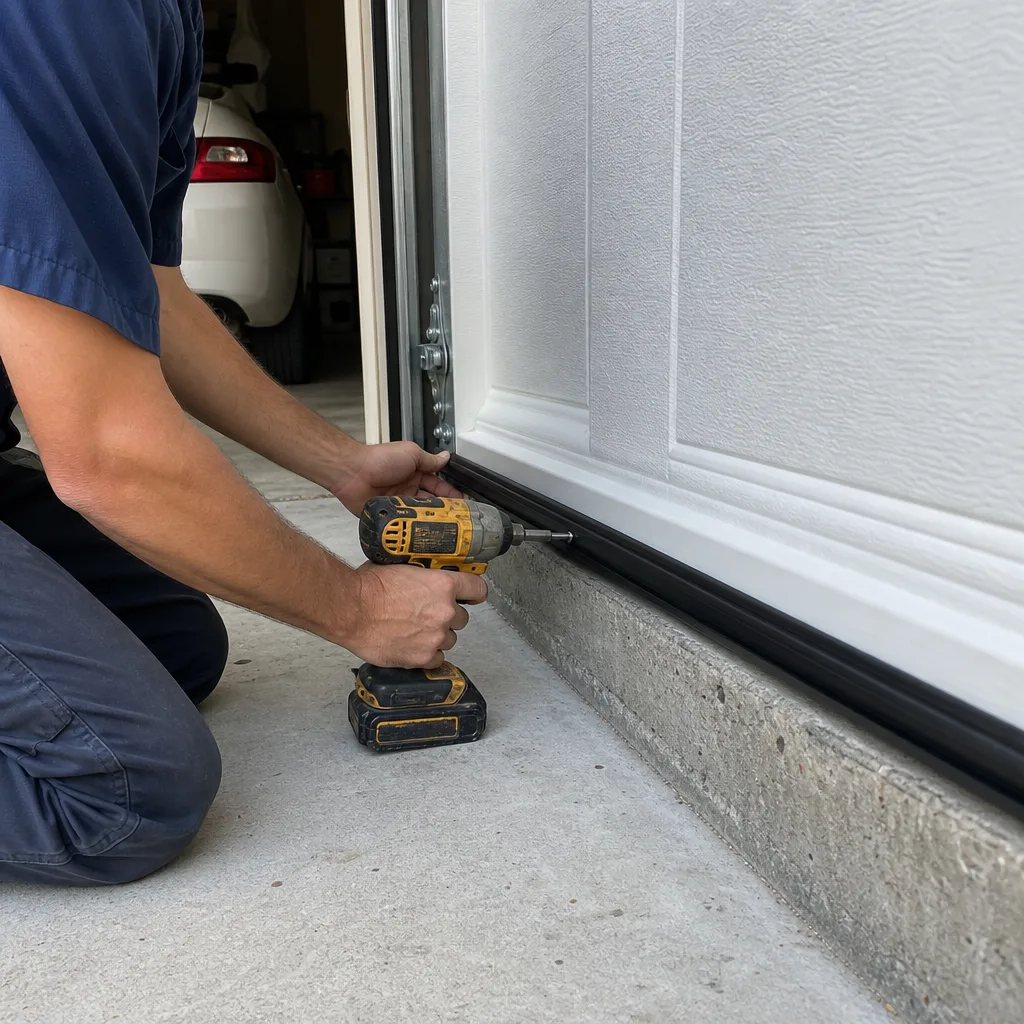
- Asking the contractor whether a permit is required and accepting a verbal “no” without checking. The city, not the contractor, decides permitting. A 90-second call to the Building and Safety Division in Thousand Oaks settles it in writing.
- Classifying structural work as a “repair” on the permit application. This is the fastest way to get a permit revoked or a job red-tagged. The city uses the scope, not the paper, to decide what the work is.
- Treating a like-for-like door swap as a license to change the track configuration. A new Genie or Chamberlain opener with a different rail length can change track geometry and void the “like-for-like” exemption. Confirm before you install.
- Considering only the city fee and ignoring the engineering cost. Structural changes often need a stamped drawing, which can cost more than the permit itself. The permit fee alone is not the project’s documentation cost.
- Running the final inspection without the correct door label visible. In Ventura County wind zones, a missing pressure rating label can fail the inspection on a technicality. The door comes with a label; don’t paint over it or remove it.
- Filing a TDS with a guess. If you inherited unpermitted work and list something vague, you’ve traded a known disclosure for an unknown liability. Disclose precisely: what work, what year, no permit.
When to Call a Professional
Call a professional the moment the scope leaves Category 1. That means any change to the opening dimensions, any header or beam modification, any shear wall work, any fire-separation change, or any door installed in a Thousand Oaks hillside zone where wind-load ratings apply. Those projects require permit navigation, engineered drawings, and inspection experience-see our How to Hire a Garage Door Contractor in Thousand Oaks: A Step-by-Step Guide-and whoever does the work should have a documented scope before starting.
Anyone replacing a door in Thousand Oaks should also confirm which zone the property sits in, because the county’s wind and fire amendments change what door is legal. Servo Garage Doors Thousand Oaks offers free estimates in Thousand Oaks, including a written scope with the permit obligations named up front. Call (424) 395-3203 if you’re planning a door that might need a permit.
Frequently Asked Questions
You typically do not need a permit in Thousand Oaks for a like-for-like garage door replacement that leaves the opening, header, and structure unchanged. You do need a permit if the opening size changes, the header is modified, or structural work is involved. Confirm with the city’s Building and Safety Division before the job starts.
A garage door permit in Thousand Oaks typically costs between $180 and $420 total in city fees, including issuance, plan check, inspection, and records surcharges. Structural jobs with engineered drawings may add plan check review costs. Call (424) 395-3203 if you want an exact scope-based estimate, including the permit line item.
Not if you’re working with a company that quotes flat, written prices before any work starts. That’s how Servo operates: the written scope and price come before the work, per Clause 1 of The Haven Standard. If you’re comparing bids, ask each contractor to put the permit and inspection fees in the written scope. Call (424) 395-3203 for a free written estimate in Thousand Oaks.
Yes, and that’s the standard we follow in Thousand Oaks. The contractor lists the permit in the written scope, pays the fees, schedules the inspections, and provides the signed final as part of the documented record. If a contractor refuses to handle the permit on a structural job, that’s a signal the job isn’t being done legally.
The unpermitted work becomes a factual item on your Transfer Disclosure Statement, because California law requires truthful disclosure of work done without required permits. It can surface as a buyer’s repair request, a price concession, or a disclosure dispute after close of escrow. The fix is a permit after the fact, which the city will process, though the inspector may require opening the work back up to see what was changed.
Yes, in many Thousand Oaks zones. Ventura County amendments to the California Residential Code set design wind pressure requirements that differ by site. A door on a hillside lot in Newbury Park or North Ranch can require a higher rated assembly than a door on a flat lot in central Thousand Oaks. The rated door will have a manufacturer’s label the inspector checks at final.
The Bottom Line
The permit question in California isn’t about the door; it’s about the structure behind the door. A like-for-like swap on an existing opening is almost always permit-free. Any change to the opening, header, or shear wall pushes the project into permit territory, and skipping that permit pushes it into your disclosure paperwork when you sell the home. In Thousand Oaks, the city’s Building and Safety Division is the decision-maker, the fee range is about $180 to $420, and the inspection verifies structure, wind rating, and fire separation. The cheapest insurance for the whole project is a documented paper trail: a written scope, a permit when required, and a signed final you keep.
If you’re planning a garage door project in Thousand Oaks, Garage Door Repair in Thousand Oaks or Garage Door Installation in Thousand Oaks can connect you to a written-scope service approach. For opener work, see Garage Door Opener Repair & Installation in Thousand Oaks. Call (424) 395-3203 for a free estimate with the permit question answered up front. We won’t tell you “you’re fine” to win the job. We’ll tell you what the city requires, in writing, before any work starts.
Written by Marcus Deller, Owner at Servo Garage Doors Thousand Oaks, serving Thousand Oaks since 2015.