
Last updated September 20, 2026
Full 25-point door and opener safety check with every visit - springs, cables, rollers, tracks, and your LiftMaster or Chamberlain opener included
You get a price before we start. It does not change when the truck arrives.
 Before
 After
After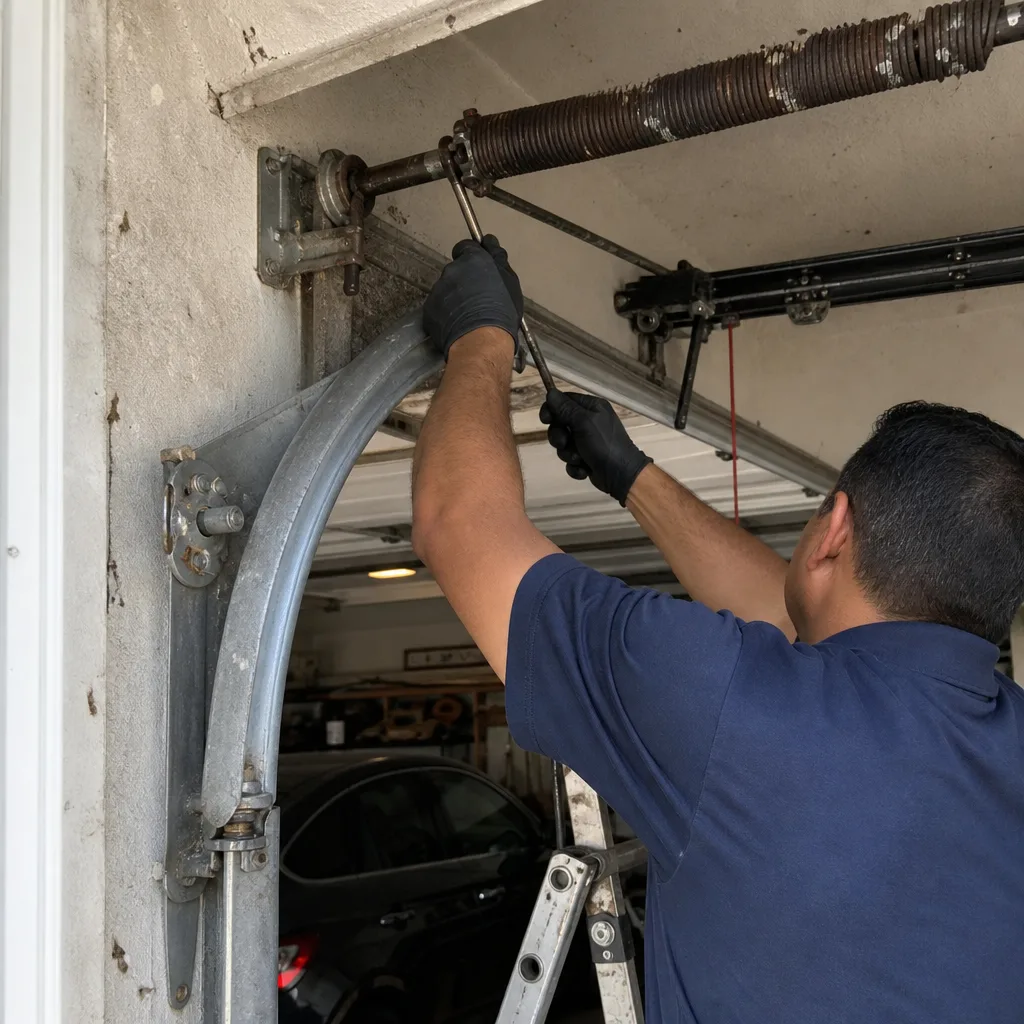 Before
 After
After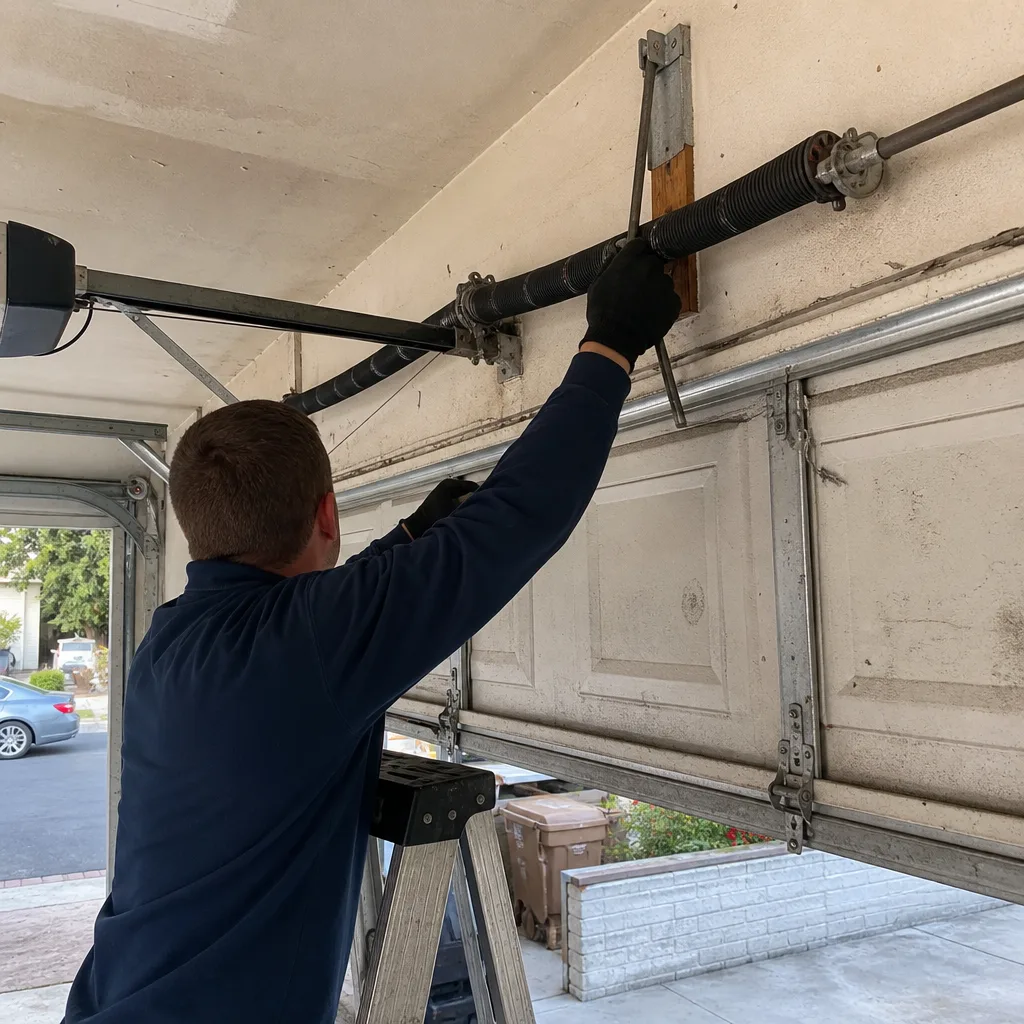 Before
 After
AfterDIY vs Professional Garage Door: The Thousand Oaks Homeowner’s Decision Guide
Garage door cable replacement looks like a YouTube job until you understand that a torsion spring stores roughly 100 foot-pounds of torque at rest, and releasing it incorrectly doesn’t give you a second attempt. The DIY calculus here isn’t about mechanical skill; it’s about whether the consequence of a mistake is a bruised knuckle or a broken wrist. This guide walks through which garage door tasks a careful Thousand Oaks homeowner can handle, which ones never make sense to self-perform, and what actually separates professional work from a determined weekend effort. By the end, you’ll know the exact cost of guessing wrong, both in dollars and in hospital bills.
Quick Answer
For most Thousand Oaks homeowners, weather seal replacement, roller lubrication, sensor realignment, and opener limit adjustments are reasonable DIY tasks. Torsion spring replacement, cable work, panel replacement, and any repair involving the opener logic board or high-tension hardware are professional-only jobs, not because of skill ceilings but because the failure mode carries injury risk that doesn’t decrease with experience. A miscalculated torsion spring releases stored energy in milliseconds, and the math doesn’t favor self-service no matter how competent you are.
Table of Contents
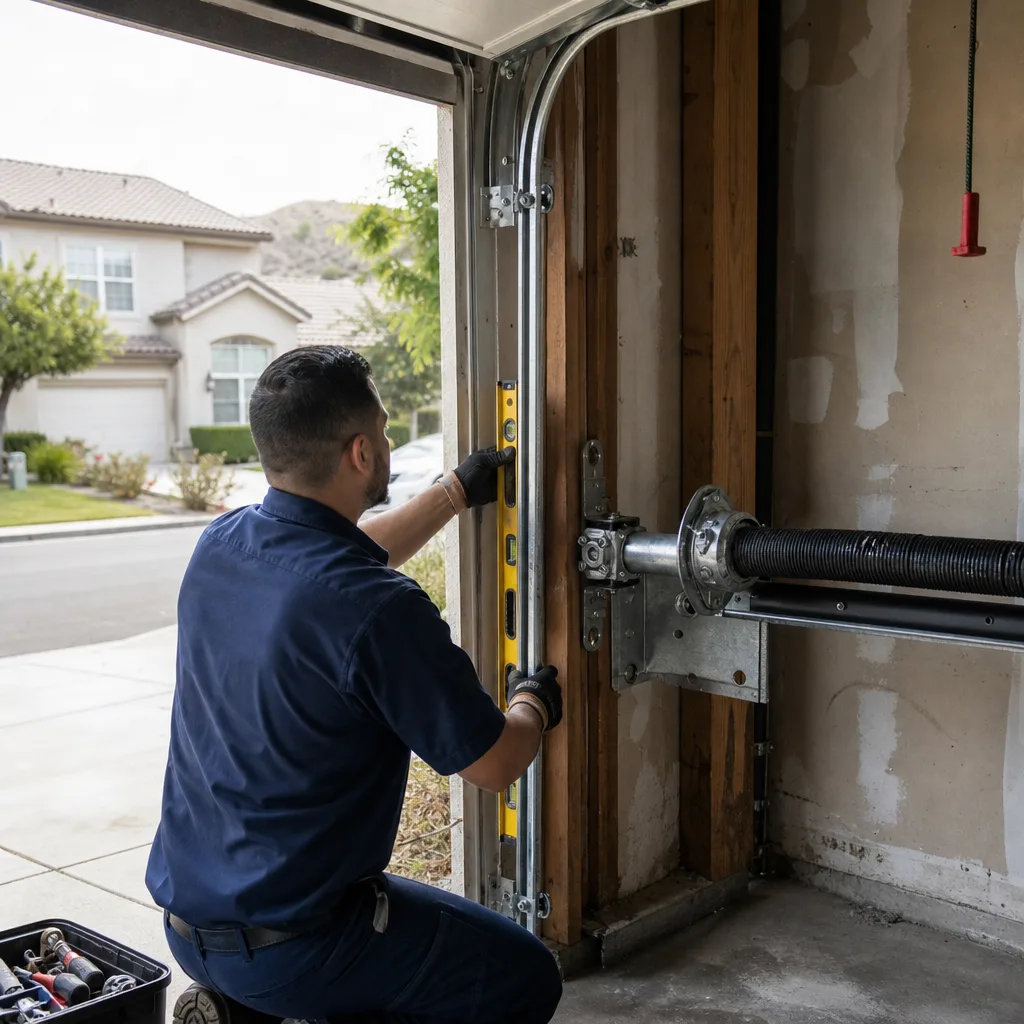
- The Real Cost of DIY Garage Door Repair
- Tasks You Can Safely Do Yourself
- Tasks That Are Professional-Only, Regardless of Skill
- How Thousand Oaks Climate Affects Your Garage Door
- California Liability and Your HOA
- How to Reduce Labor Costs Without Doing Dangerous Work
- What Actually Justifies a Professional Fee
- Common Mistakes to Avoid
BeforeAfterThe Real Cost of DIY Garage Door Repair
Thousand Oaks homeowners tend to calculate DIY savings by comparing a $25 part against a $300 service call. That math misses three costs that show up later. First, the tooling cost: winding bars for a torsion spring run $15 to $30, but using a screwdriver or pry bar instead is how lacerations and fractures happen. Second, the diagnostic cost: replacing a part that isn’t actually the problem. We’ve seen homeowners in Newbury Park replace a limit switch three times before discovering the real issue was a failing logic board. Third, the failure cost: a spring that lets go because it wasn’t properly torqued can send a 150-pound door crashing down on a car, a child, or the track assembly itself.
The honest breakdown for Thousand Oaks garage door repair looks like this:
- Weather seal replacement: $18 to $45 in materials, 30 to 60 minutes, genuinely DIY-appropriate.
- Roller replacement (non-cable rollers): $10 to $30 per roller, but removing the bottom roller bracket means touching tensioned cable, which changes the risk profile entirely.
- Sensor alignment: $0 in materials, 15 minutes, DIY-appropriate on most LiftMaster and Chamberlain openers.
- Torsion spring replacement: $180 to $340 professionally done in Thousand Oaks; $60 to $90 in parts alone for DIY, plus the cost of whatever breaks when the winding goes wrong.
The parts cost is never the question. The question is whether the job has a failure mode that injures. On a torsion spring, the answer is yes, every time, at every skill level.
Tasks You Can Safely Do Yourself
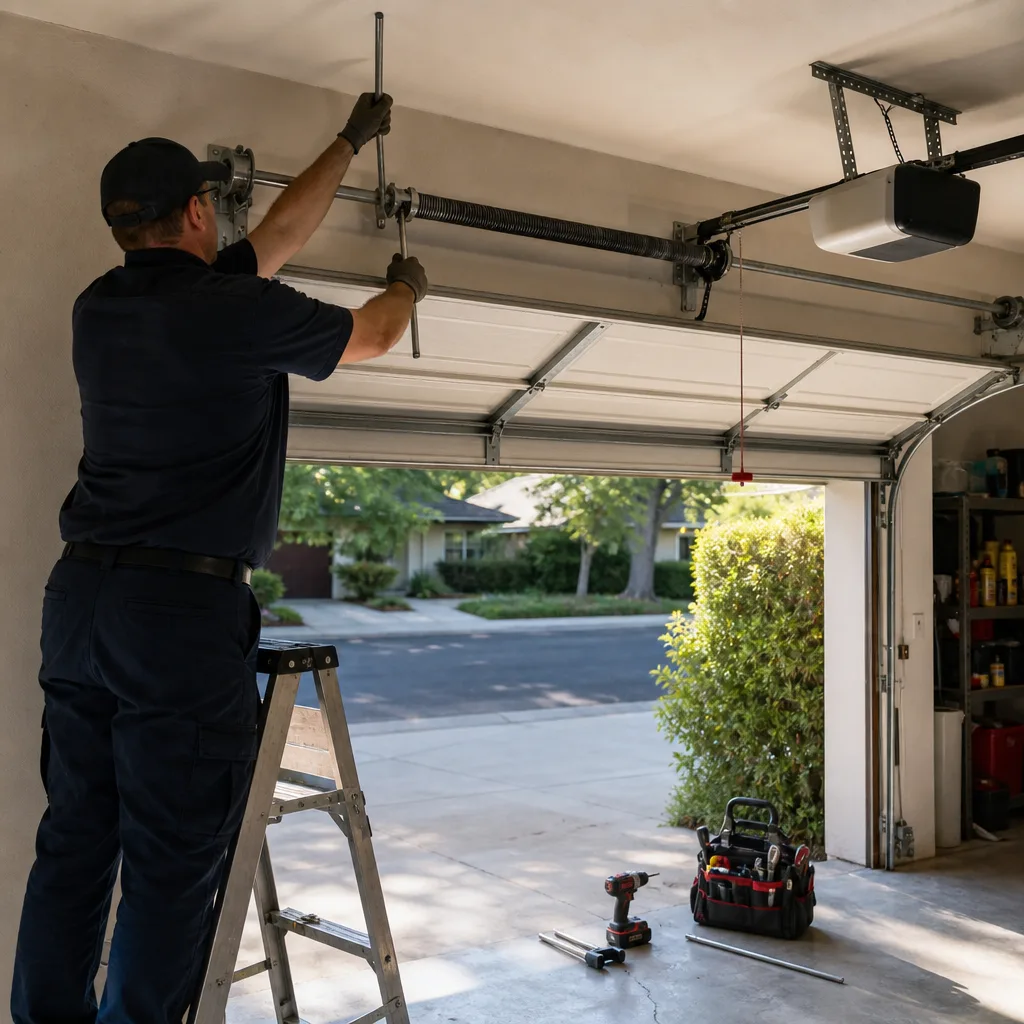
There’s a real list of garage door maintenance tasks that a mechanically literate Thousand Oaks homeowner can handle without calling anyone. These are the jobs where the failure mode is cosmetic or inconvenient, not injurious. Here’s what we mean.
Weather Seal and Bottom Gasket Replacement
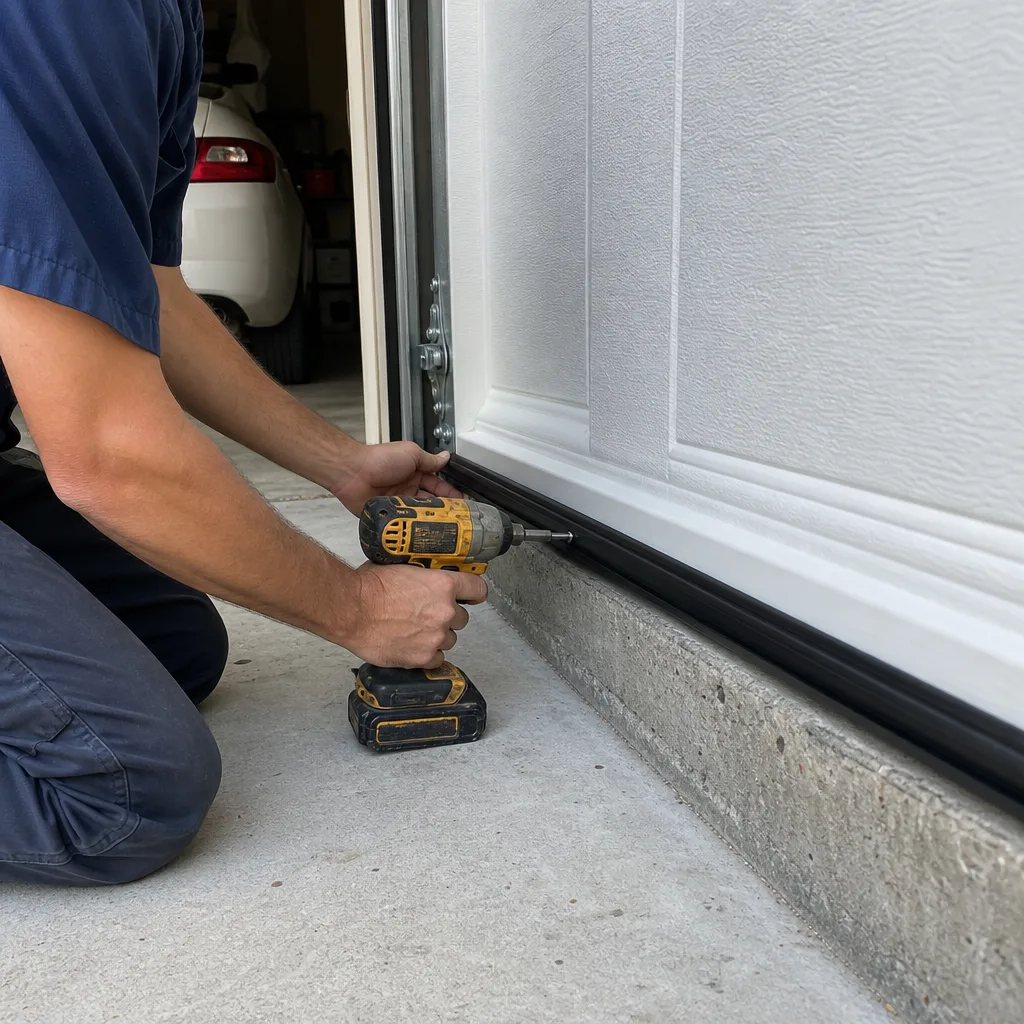
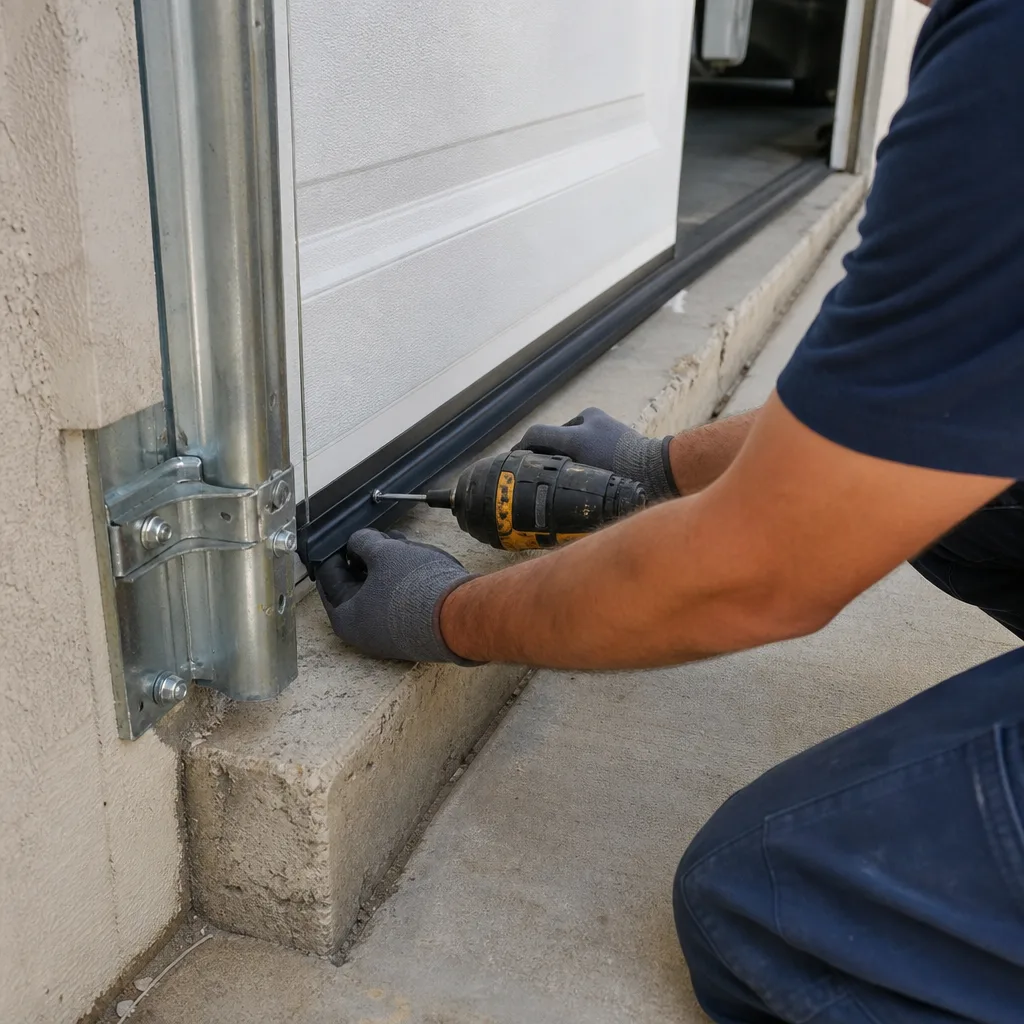
The vinyl or rubber strip along the bottom of the door degrades in the Conejo Valley’s dry heat and direct sun exposure. Replacing it means pulling the old strip out of its track and sliding the new one in. No tension, no springs, no stored energy. This is a 30-minute job that costs under $50 and makes a real difference in keeping dust and critters out of the garage. Homeowners in the Lynn Ranch and Wildwood areas deal with more wildlife intrusion than most, and a tight bottom seal is the cheapest line of defense.
Roller Lubrication
Steel rollers on a metal track benefit from a white lithium or silicone spray twice a year. Spray the roller bearings and the hinge points, not the track itself. Greasing the track attracts dust and creates drag. Garage door opener repair in Thousand Oaks is often prompted by motors working against unlubricated rollers for years. This is a five-minute task you’ll actually notice in noise reduction.
Photo Eye Sensor Alignment
When the door refuses to close and the opener lights blink, the photo eye sensors at the base of the track are usually the cause. A loose bracket, a bumped sensor, or sun glare can knock them out of alignment. Loosen the wing nut, adjust the sensor until the indicator light goes solid, tighten. If it’s a sun glare problem, a small cardboard shade fixes it. This is the most common call we get that’s solvable in five minutes by the homeowner.
Opener Limit Switch Adjustment
On most LiftMaster, Chamberlain, and Genie openers, the limit controls determine how far the door travels up and down. If the door doesn’t close flush, or it reverses right after sealing, a limit adjustment often fixes it. On older units, this means turning a dial; on newer ones, it’s in the wall panel menu. The key is small increments and testing after each adjustment. If the door slams hard at the bottom despite adjustments, that’s a travel module issue, and it’s time to call.
Tasks That Are Professional-Only, Regardless of Skill
This section is the reason we wrote this guide. Some garage door work should never be DIY, and not because we want the job. These tasks carry failure modes that don’t care how careful you’ve been, how many videos you’ve watched, or how many times you’ve done it before.
Torsion Spring Replacement
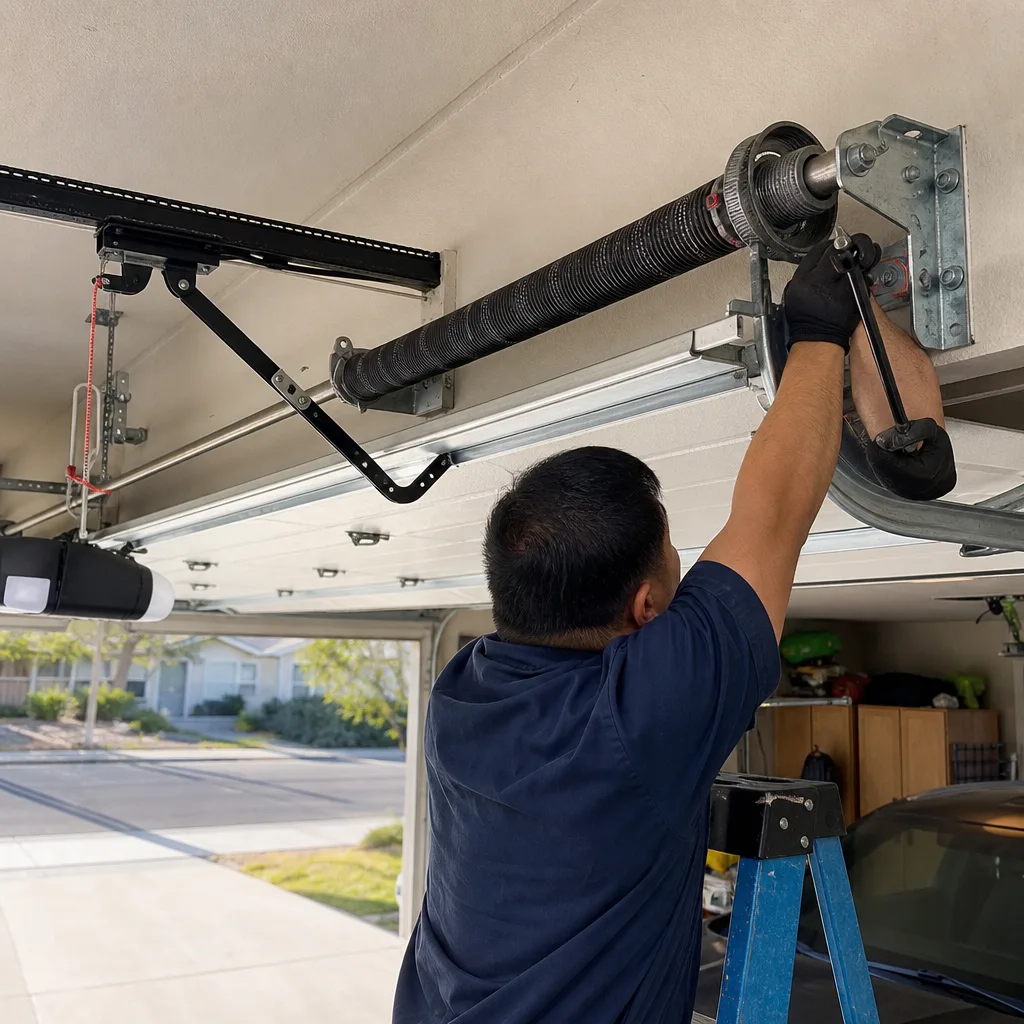
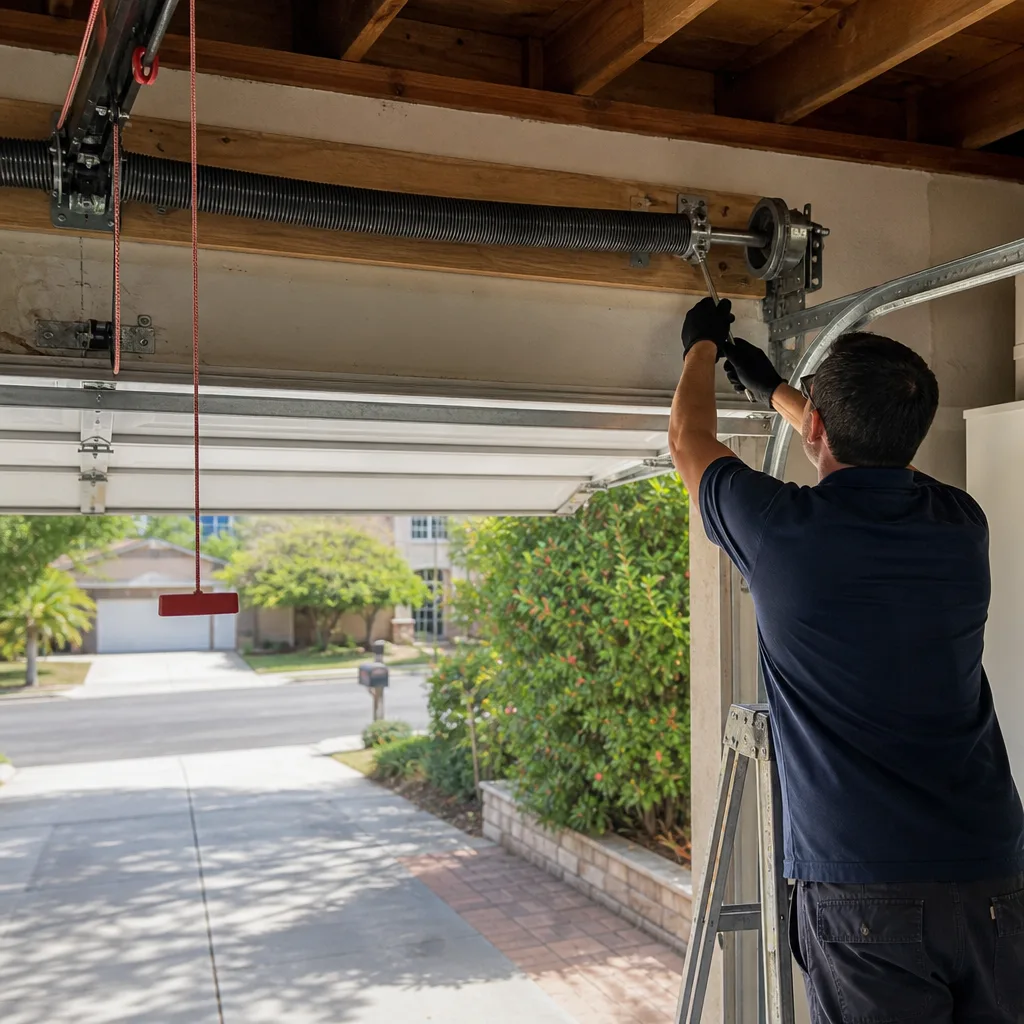
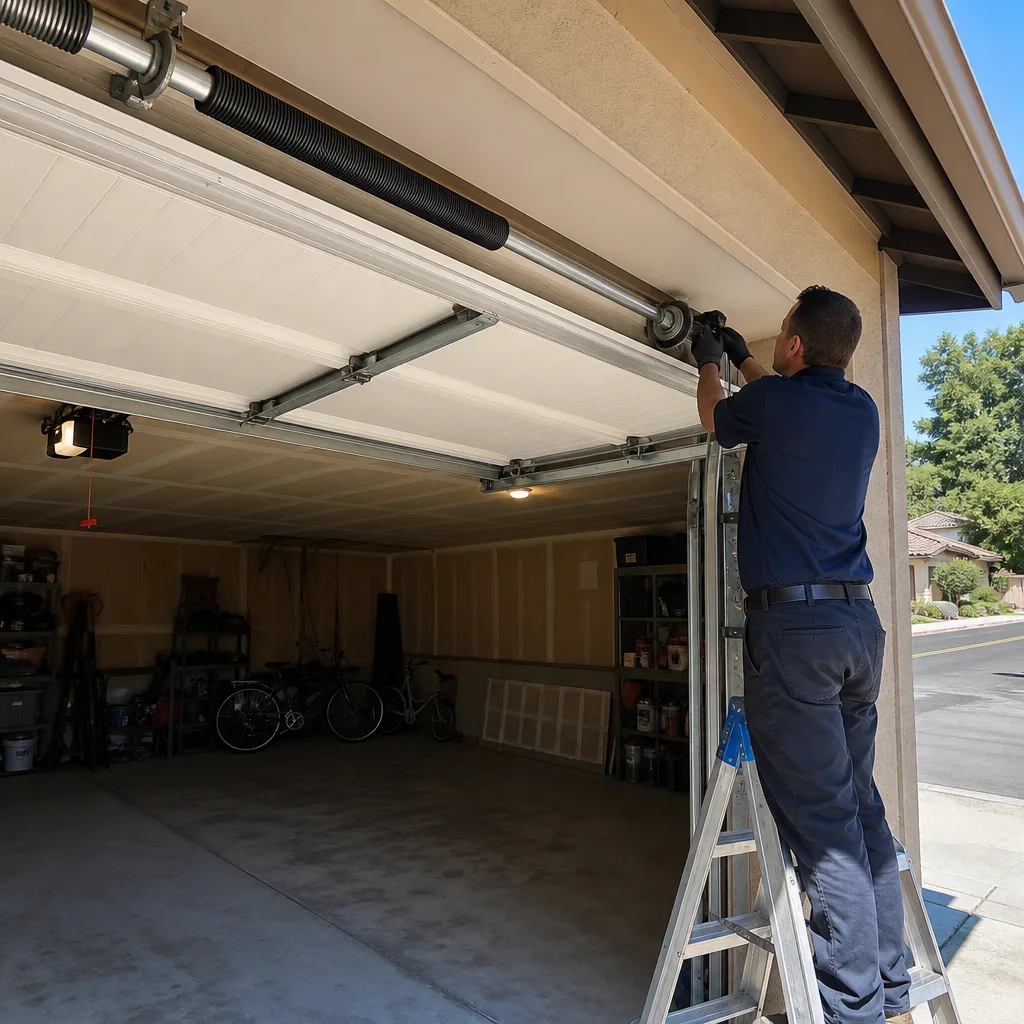
The torsion spring is mounted on a shaft above the door and holds the door’s entire weight via stored torque. That torque is measured in foot-pounds, and a typical residential spring at rest holds enough energy to break a forearm if it releases uncontrolled. The winding bars used to tension or de-tension the spring are solid steel for a reason. The injury mechanism isn’t a slow failure; it’s a sudden release when a winding bar slips out of the cone socket, and the bar becomes a projectile at whatever speed the spring unwinds. Professional technicians in Thousand Oaks carry winding bars sized to the cone, a full-face shield, and the knowledge of exactly how many quarter-turns each spring wire diameter requires. A mistake here doesn’t produce a bent door; it produces a hospital visit. This is the one job where we’ll say plainly: do not do this yourself.
Cable Replacement
Garage door cables attach to the bottom corner brackets and route around pulleys up to the spring mechanism. They run alongside the spring under full tension, which means any cable repair involves touching a loaded system. The dangerous assumption is that replacing a frayed cable is a simple swap. It is not. Loosening the wrong bolt with the spring wound releases the stored energy through the cable path, and the cable can whip with enough force to lacerate whatever it contacts. If a cable is frayed or snapped, the spring tension needs to be released first, and that means the professional-only procedure above.
Panel Replacement
A single damaged panel looks like a bolt-off, bolt-on job. On most modern doors from Amarr, Clopay, and Wayne Dalton, it’s actually a series of hinge pins, strut bars, and reassembly steps under spring tension. A door with a removed panel changes weight and balance, which changes the spring load requirement. Put a panel on without recalculating spring tension, and the door either slams shut or won’t lift. That’s not a finish problem; it’s a safety problem for anyone using the door.
Opener Logic Board or Motor Replacement
This one doesn’t carry the injury risk of springs, but it does carry the electrical and diagnostic risk. A logic board replacement means matching the exact board revision to the opener model, understanding how to program travel limits and force settings, and correctly connecting low-voltage wiring to the safety sensors. Get the force setting wrong on a LiftMaster opener, and the door can close on an object without reversing. The failure mode is property damage or child injury, not a fried circuit board.
How Thousand Oaks Climate Affects Your Garage Door
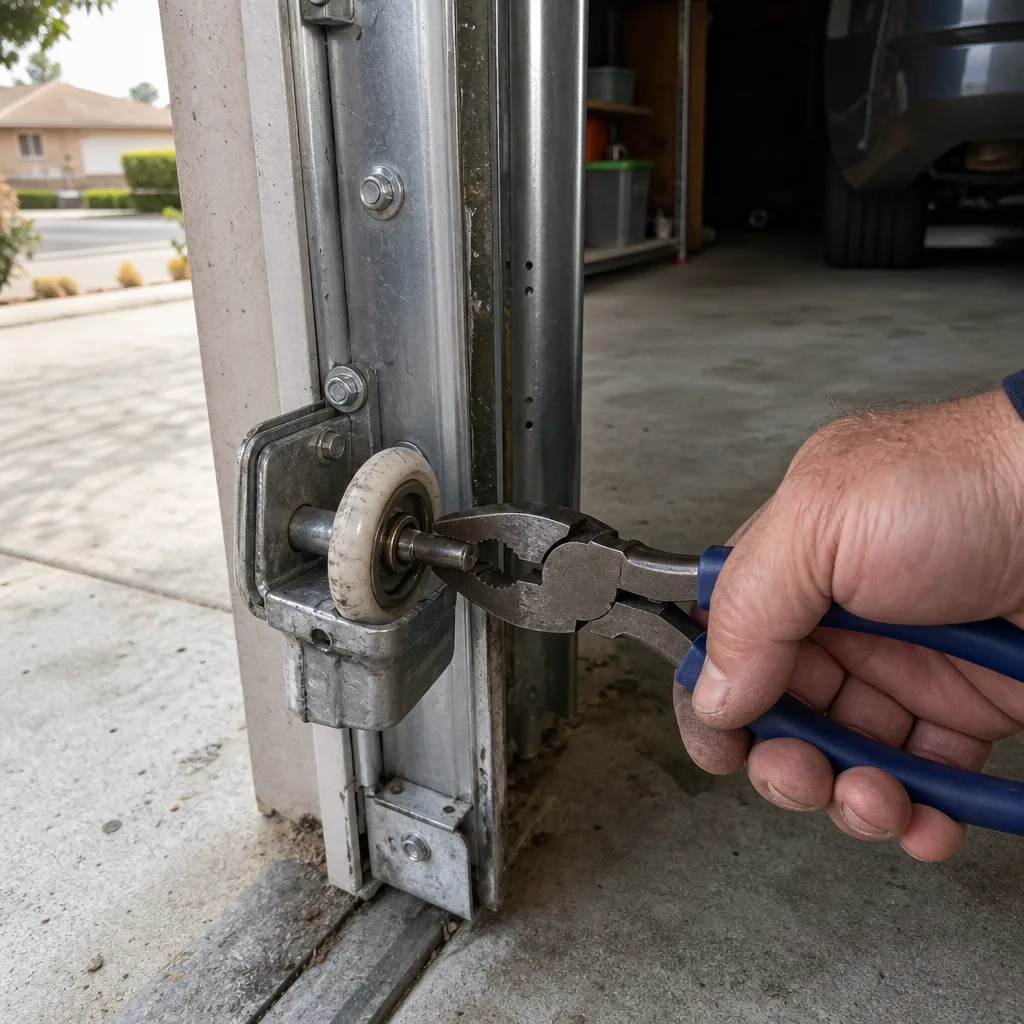
Thousand Oaks sits in a semi-arid climate with hot, dry summers, and those conditions have a specific effect on garage door hardware. The heat accelerates the breakdown of torsion spring metal through a process called creep: the coiled steel gradually loses its original tension over hundreds of heat cycles. A spring rated for 10,000 cycles might fail at 7,000 in a Conejo Valley garage that routinely hits 100 degrees in summer. That’s why Thousand Oaks homeowners replace springs more frequently than coastal homeowners do.
The dryness also attacks vinyl weather seals faster than you’d expect. Moisture keeps vinyl pliable; without it, the seal cracks and loses its grip on the concrete threshold. We replace more weather seals in Thousand Oaks than anywhere else we work. Conversely, the low humidity means rust is a non-issue, which is the honest good news. Metal tracks and hinges don’t corrode here the way they do in Oxnard or Ventura.
For DIY purposes, the climate angle is simple: if your springs are older than seven years and you live in Thousand Oaks, they’re closer to the end of their service life than the average homeowner thinks. The heat is working against you even when the door is closed. That’s not a sales pitch; it’s the physics of steel under repeated thermal load.
California Liability and Your HOA
Thousand Oaks has more HOA-governed tract communities than almost any city in Ventura County, and that creates a liability angle most DIY garage door advice ignores. If you replace a torsion spring yourself and the spring fails, causing the door to collapse on a car or injure someone, your homeowner’s insurance will ask one question: who installed it?
In California, homeowner’s insurance generally covers sudden and accidental damage, but insurers have become more aggressive about subrogating claims to work performed by unlicensed individuals. If a DIY spring repair fails and damages your own car or a family member, you’re likely covered. If it damages a neighbor’s vehicle or injures a guest, your insurer may cover the liability and then evaluate whether gross negligence on your part applies. That’s a legal gray zone you don’t want to test with medical bills attached.
The HOA angle is more direct. Many Thousand Oaks HOAs, particularly in newer developments like Lang Ranch and Dos Vientos, have architectural and maintenance standards that require garage door repairs and installations to be performed by licensed contractors. A neighbor reports a noise complaint or a visibly non-standard repair, and you’re facing a notice to cure with a deadline. The cost of redoing a professional repair is always higher than doing it professionally the first time.
None of this applies to the benign DIY tasks listed earlier. Lubricating rollers or aligning a photo eye doesn’t create liability exposure. But anything touching springs, cables, or the door’s structural panels does, and that’s a California-specific consideration worth factoring into the decision.
How to Reduce Labor Costs Without Doing Dangerous Work
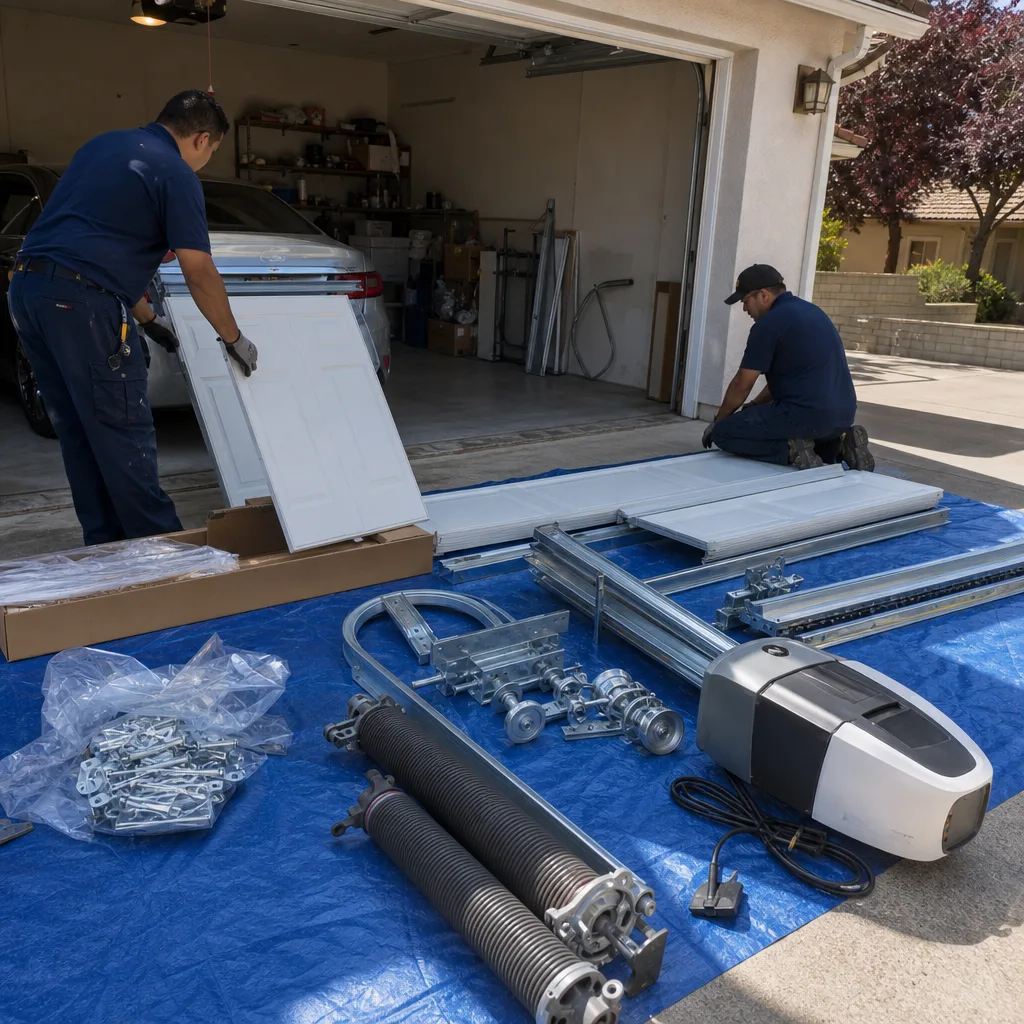
Here’s the practical middle path. You don’t need to touch a torsion spring to reduce what a professional service call costs. You need to arrive at the call with accurate information and completed prep work. Here’s what that looks like in practice.
- Diagnose accurately before calling. Note the symptom: door won’t open, door opens but won’t close, door closes then reverses, opener runs but door doesn’t move, grinding noise, etc. A precise symptom eliminates diagnostic time on site.
- Photograph the hardware. Take clear photos of the spring assembly, the cables, the bottom brackets, and the opener unit. A good technician can often identify the brand and approximate part from photos.
- Know your door brand and approximate age. Check the manufacturer label on the inside of the door panel. If it says Raynor, Craftsman, LiftMaster, or any of the common brands, that information narrows part sourcing.
- Clear the work area. Move cars, bikes, and storage away from the door path and the track on both sides. Remove anything hanging on the walls near the spring assembly. This is simple prep that saves professional labor time.
- Test the door manually. Pull the emergency release cord and lift the door by hand. If it’s heavy, the spring has failed or lost tension. If it stays in place, the spring is likely fine and the issue is elsewhere, probably the opener or a sensor. That test takes 30 seconds and is entirely safe when done correctly.
Servo Garage Doors Thousand Oaks works off written, flat-price scopes. When a homeowner calls with a clear diagnosis and the workspace cleared, the quote we give reflects the exact repair, not the time it takes to figure out what’s wrong. That’s how you get a lower bill without ever picking up a winding bar. For more detail on what professional repair involves, see our Garage Door Repair in Thousand Oaks page.
What Actually Justifies a Professional Fee
If you’re standing in your garage looking at a repair that a technician quoted at $300 and a YouTube video says is a $60 part, the fair question is: what’s the other $240 buying? Here’s the honest answer, and it’s not “expertise.” Expertise is part of it, but you’re also paying for what the professional does differently than a careful DIYer.
The technician arrives with the correct winding bars for the spring’s cone size, not a pair of screwdrivers. They know the quarter-turn count for each wire diameter and spring length. They check the balance of the door after installation, which means lifting it halfway by hand to confirm it stays put, because a mismatched spring means the opener motor is now doing work the spring is supposed to do. They lubricate the new spring and the rollers, test the opener force settings, and verify the photo eye sensors still function. And they photograph the completed work and hand you that record, because the documentation is what lets you verify the job was done right.
That last part matters more than homeowners expect. The Servo Garage Doors Thousand Oaks home page has more detail on what our documentation includes. Every visit ends with a photo record of what was found and what was done. Clause 4 of The Haven Standard exists because our founder photographed a failed component before quoting a replacement, and the customer saw the evidence. That’s the principle: the customer sees the failed part before anyone quotes a replacement.
Marcus Deller, who runs Servo Garage Doors Thousand Oaks, put it this way: “Say what we found, not what we felt about it. The torsion spring measured at 0.25-inch wire diameter and showed a clean break at the coil. That’s a fact. ‘Your spring is in bad shape’ is an opinion.” That distinction is what the professional fee actually buys, evidence instead of persuasion.
Common Mistakes to Avoid
- Using screwdrivers as winding bars. This is how torsion spring injuries happen. The cone socket eats the screwdriver tip, the bar slips, and the stored energy releases through whatever is holding it. Always use proper winding bars or don’t touch the spring.
- Lubricating the track instead of the rollers. The track needs to stay clean and dry. Greasy tracks collect Conejo Valley dust, which turns into abrasive paste that grinds the roller bearings.
- Replacing one spring instead of both. Torsion springs are installed in pairs on most doors. When one breaks, the other is at the same cycle count and likely near the end of its life. Replacing only one means a second service call within a year, and the door will be slightly unbalanced in the meantime.
- Tightening cables without releasing spring tension first. This is the second-most-dangerous DIY mistake in garage doors, behind winding bar misuse. Cables under load will not be adjusted by hand, and forcing it risks a cable whip.
- Assuming the opener is the problem when the door won’t move. It’s usually the spring. Test by pulling the emergency release and lifting the door manually. If it’s heavy, the spring is the issue.
- Skipping the balance test after any repair. If you’ve done any work on the door, lift it manually to the halfway point. A properly balanced door stays put. One that drops or rises has a spring issue that will destroy the opener motor over time.
When to Call a Professional
Call a professional if the door won’t open or close, if you hear a loud snap from the garage and the door suddenly feels heavy, if a cable is frayed or off the pulley, if the door is visibly crooked in the tracks, or if you’ve already replaced a part and the problem persists. In Thousand Oaks, Servo Garage Doors Thousand Oaks offers free estimates with a flat, written price delivered before any work starts, per Clause 1 of The Haven Standard. Call (424) 395-3203 to schedule. If you’re considering a full replacement rather than a repair, our Garage Door Installation in Thousand Oaks page covers the process and pricing transparently.
Frequently Asked Questions
Torsion spring replacement in Thousand Oaks typically runs $180 to $340 for a standard residential door, including both springs, labor, and a balance check. Single-spring doors cost less; oversized or specialty doors cost more. The price is quoted flat, in writing, before any work begins, so the number you approve is the number you pay.
No. A torsion spring under tension stores enough energy to cause serious injury if released improperly, and the release happens too fast to correct mid-motion. Even experienced DIYers should not attempt this repair. Hire a professional with the correct tools and a full understanding of spring mechanics.
You can replace weather seals, lubricate rollers and hinges, align photo eye sensors, and adjust opener limit switches. None of these tasks involve stored energy or tensioned components, and all of them take under an hour with basic tools. If you’re checking your opener’s settings, make sure you know whether it’s a newer smart unit or an older model; details vary by brand.
Professional garage door repairs do not affect your homeowner’s insurance, but DIY repairs that subsequently fail can complicate liability claims if the failure causes property damage or injury. Some insurers may investigate whether the work was performed by a licensed professional, particularly in HOA-governed Thousand Oaks communities with maintenance standards.
Yes. Servo Garage Doors Thousand Oaks answers calls live 24/7, including emergencies, and same-day service is available in Thousand Oaks and the surrounding Conejo Valley. You’ll speak with a real person, not a recording, and receive a named technician with an on-the-way text.
No. The flat written price and written scope are delivered before any work begins, and that’s the price you pay unless you approve a change in scope separately. Clause 1 of The Haven Standard means ‘call for a quote’ is not how this works. For opener-related questions, see our Garage Door Opener Repair & Installation in Thousand Oaks page.
The Bottom Line
The DIY vs. professional decision on garage door work in Thousand Oaks comes down to failure modes, not skill. Weather seals, lubrication, sensors, and opener adjustments are safe and reasonable DIY territory. Torsion springs, cables, panels, and logic boards are professional-only because the failure mode is severe, regardless of who’s holding the tool. The Thousand Oaks heat shortens spring life, the HOA landscape adds liability, and the difference between a $60 part and a $300 professional repair is the documentation, calibration, and safety equipment that comes with the professional. When the job touches tension, call someone who photographs the failed part before quoting a replacement.
Written by Marcus Deller, Owner at Servo Garage Doors Thousand Oaks, serving Thousand Oaks since 2015.